
2026 Undergraduate Research on Ice Nucleation
in Austria
Summer Research Experiences for Undergraduates
Funded by the National Science Foundation
May 26, 2026 to July 31, 2026
- Up to 5 positions available
- Receive a stipend of $7,000
- Funds for travel to
Blacksburg, Virginia & Vienna, Austria
- Free housing and
meals in Blacksburg, VA & Vienna, Austria
- Hands on research working with grad students & faculty
- Cultural activities & training in German, ethics & professionalism
Applications Due 5pm ET on February 9, 2026. Click Here to Apply!
Reference Letters Due 5pm ET on February 9, 2026. References Click Here to Submit a Letter.
Overview
Students will conduct pre-departure educational activities and peer mentoring in the Schmale Lab at Virginia Tech for about one week. Then, they will conduct about six weeks of field and laboratory research in the Grothe Lab at the Technical University of Vienna, Austria. Upon completion of the research in Austria, the students will return to Virginia Tech for post-trip activities, including analysis and presentation of data at Virginia Tech's annual Summer Undergraduate Research Symposium on July 30, 2026.
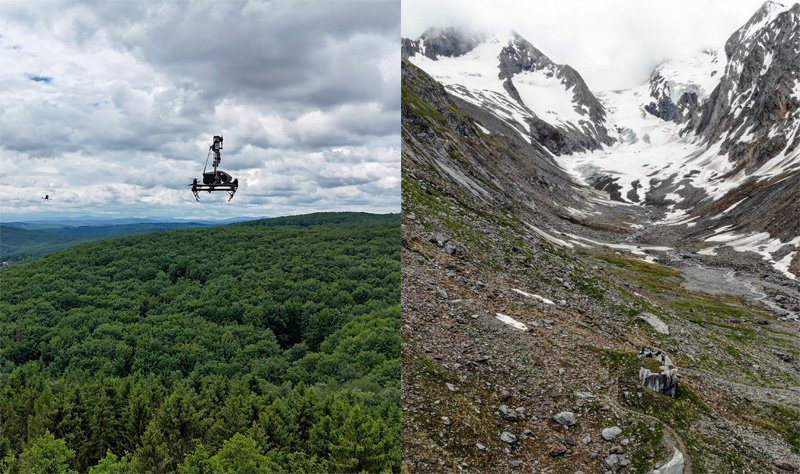
Dr. Hinrich Grothe, Professor, Technical University of Vienna, Vienna, Austria will host students in his laboratory. Participating students will frame questions and conduct research concerning ice nucleation at the interfaces of water, soil, vegetation, and the atmosphere. Students will be fully integrated into the Schmale and Grothe labs, and will experience hands on research, group meetings, and close collaboration with other members of related research groups.
Application requirements
- Personal Statement (no more than one page, 12 point font, one inch margins)
- Short
Video Submission (2 minutes or
less, .mp4 format, 100 MB maximum).
Please begin your video by stating
your full name, today’s date, and
your current location. Speak
directly to the camera with your
face and voice clearly visible
throughout. A mobile phone is fine.
Record in a place that feels
meaningful to you, such as a lab,
classroom, or an outdoor space you
enjoy. In your own words, address
one or more of the following
prompts: describe a moment in the
past year when you felt genuinely
curious about science; show an
object or a printed photo of
yourself doing something meaningful
that represents your interest in
science and explain why it matters
to you; and/or share what excites
you most about the possibility of
spending a summer in Austria.
- Transcripts (unofficial transcripts are acceptable)
- Current Resume or CV
- At least one external reference letter submitted directly by the recommender
Eligibility
- Must be U.S. Citizen.
- Must possess a current and valid U.S. passport at the time of application.
- Must be and remain an undergraduate student in good standing.
- Must plan to complete a degree program.
- Must devote full time to research activities and must not engage in or accept additional employment.
- Ability to speak, read, and write German desired, but not required (English is widely spoken in Vienna).
- Because the program includes field activities in remote alpine environments, applicants must also be physically prepared to hike to research sites located near alpine lakes, glaciers, and high-elevation terrain at altitudes up to approximately 9,000 feet. Fieldwork may involve several miles of hiking over uneven ground, carrying personal gear, and working in rapidly changing mountain weather conditions. Applicants should be comfortable with sustained physical activity at high elevation and able to participate safely in these field components.
FAQs
FAQ1. Do I need prior
experience in atmospheric science or ice
nucleation?
No. Students from any STEM discipline
are welcome to apply. Experience in
chemistry, biology, physics, engineering, or
environmental science is helpful but not
required. Curiosity, motivation, and
willingness to learn are the most important
qualities.
FAQ2. Is this the same as an NSF REU?
It is similar, but officially funded as
an NSF IRES project. The structure is
comparable to an REU with a strong
international component.
FAQ3. Do I qualify if I graduate in May
2026?
No. You must remain an undergraduate
through the end of the program.
FAQ4. Can students from any university
apply?
Yes. You do not need to be a Virginia
Tech student.
FAQ5. Is German language experience
required?
No. English is widely spoken in Vienna.
A willingness to learn basic phrases is
helpful, and a short culture and language
orientation is included.
FAQ6. What is the time commitment?
This is a full time research experience.
Participants may not hold outside employment
during the program.
FAQ7. How competitive is the program?
We usually receive more applications
than available positions. Strong applicants
show genuine curiosity about science, clear
motivation for the international research
experience, and strong academic preparation.
FAQ8. Will I earn academic credit?
No academic credit is offered, but
students receive intensive research
training, professional development, and
mentoring that strengthen future
applications to graduate school,
internships, and careers in science,
engineering, environmental fields, and
related industries.
FAQ9. What is the application deadline?
Applications and at least one reference
letter are due before 5 PM Eastern Time on
February 9, 2026. Late or incomplete
applications will not be considered.